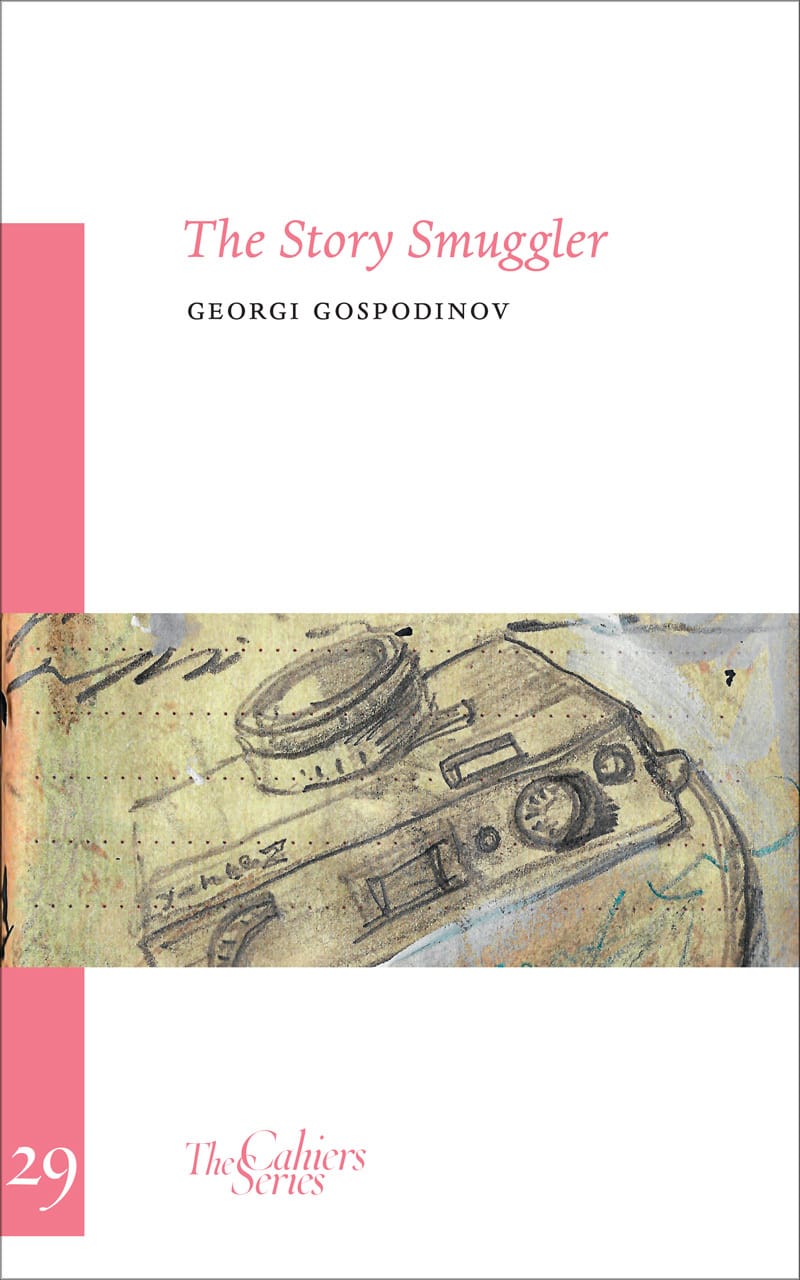
The Story Smuggler
TONY`S READING LIST - Review by Tony Malone
The Story Smuggler (translated by Kristina Kovacheva and Dan Gunn) is Bulgarian writer Georgi Gospodinov’s personal take on youth, writing and the untranslatable concept of Тъга (‘taga’), a sense of melancholy that pervades his native land. Over twenty-five brief chapters, he examines his life and career, allowing the reader a glimpse into young Georgi’s experiences behind the Iron Curtain and showing the influences that helped make him a writer.
Before we go any further, though, we need to find out a little more about Тъга:
It is not sadness, nor exactly sorrow, nor is it melancholy. The word cannot be translated into English without the entire Slavic concept behind it. In Тъга there is longing, something unrealised, a dream of what has been lost forever or of what has never been achieved. Тъга does not overwhelm you all at once, it doesn’t topple you like a wave; her waters are placid, her poison is slow, enfeebling.
p.17 (Sylph Editions, 2016)
While other languages have similar concepts, he argues, such as the Portuguese saudade, these have the sense of a longing for what once was, what we’ve lost. Тъга, on the other hand, is a desolate sense of missing what never was in the first place…
It’s an appropriate emotion for Gospodinov’s home environment. He skilfully sketches out a youth spent in a country where colour was in short supply, the schoolkids’ scrapbook ‘lexikons’ furtive attempts to bring the rainbow into a rather monochrome existence. It’s little wonder that the poet in the boy tends towards the morose, producing a piece dominated by thoughts of the passing of time and death (causing the visiting state-sanctioned poet to angrily berate the child and the teacher for not following the approved themes of sunrise, the mother party and the dove of peace!).
In such a society, ideas, like western goods, need to be smuggled in, and the concept of the smuggler permeates the writer’s memories. We learn of people smuggling babies’ belly buttons across the border (in the superstitious hope that the child will one day follow it abroad), bibles hidden in dictionaries and even historical examples, with monks smuggling their feelings into the books they transcribe in the form of marginalia. The young Georgi, longing for treats unavailable in his home land, even attempts to smuggle cakes out of his dreams – alas, this contraband never makes it past the stern border guards of the waking mind…
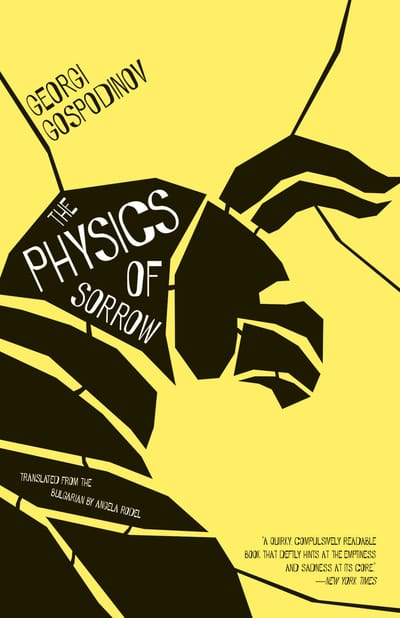
Gospodinov’s most recent novel in English, The Physics of Sorrow (translated by Angela Rodel, published by Open Letter Books) is a book I’ve long been thinking about trying, and reading The Story Smuggler has only tempted me further. It’s a beautiful little piece, elegantly written with a wry humour throughout, and if one of the aims of these Cahiers is to get you to go on and explore more of the author’s work, then (in this case, at least) it’s a job well done 🙂.
For more follow the link HERE